ASC 842 Document Management for Real Estate: What Auditors Actually Test
A practical guide for CRE finance and compliance teams on auditor test areas, evidence structure, modification trails, and ASC 842/IFRS 16 documentation controls.
Published August 3, 2026 · By ARC-Files · 16 min read
Published: August 3, 2026 | By ARC-Files
ASC 842 document management for real estate teams is harder than most compliance guides admit.Teams usually know the accounting mechanics. The real pressure is documentation: where supporting files live, whether they are version-locked, and whether auditors can retrieve evidence quickly.
This guide focuses on what external auditors test in practice, which document categories trigger the most findings, and what system architecture is required to keep large portfolios audit-ready year-round.
Key Takeaways
- ASC 842 and IFRS 16 require a complete document trail for every major lease judgment and lifecycle event.
- Auditors usually test five evidence groups first: population completeness, ROU calculations, classification records, modification trails, and renewal option assessments.
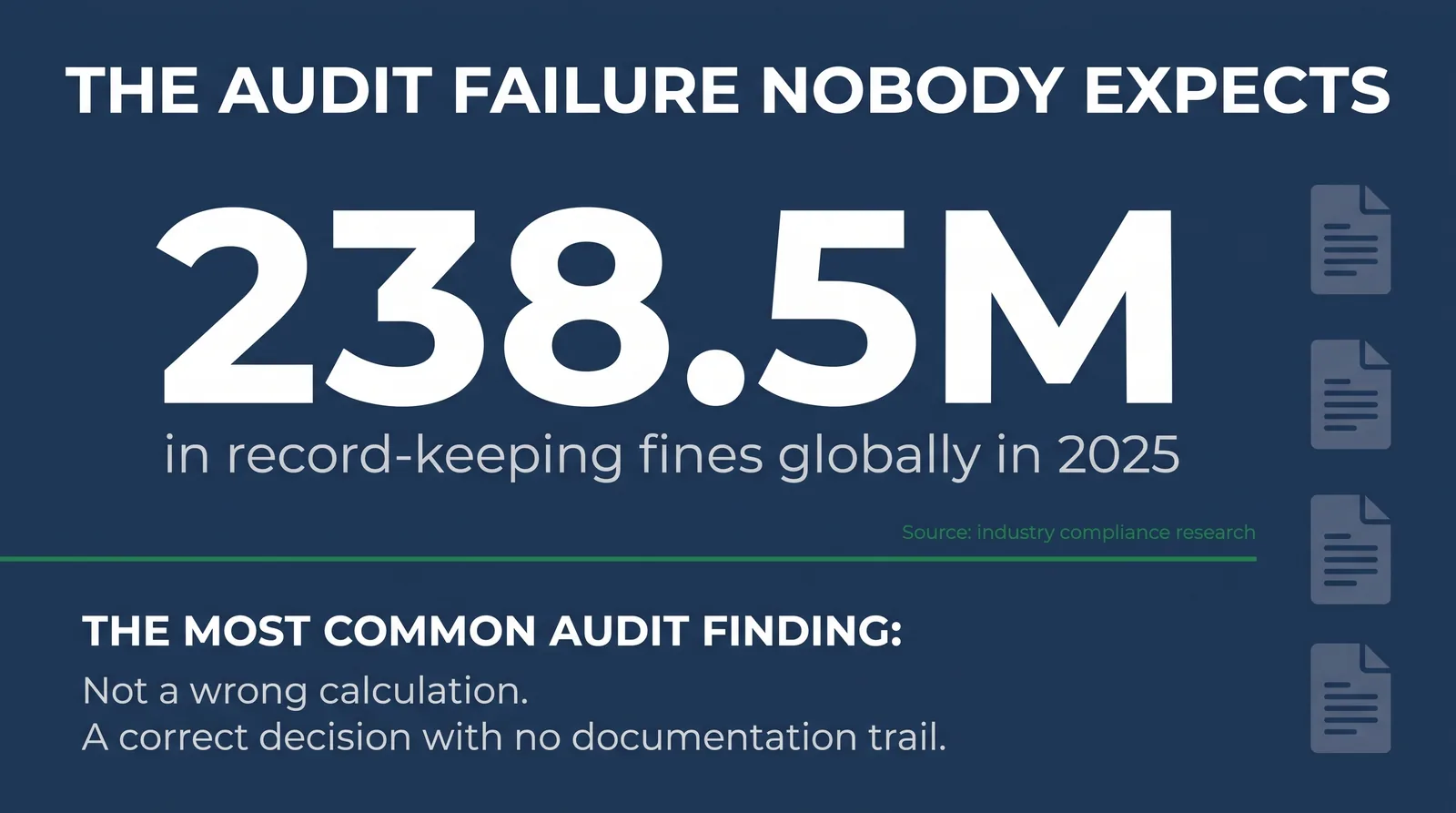
- The most common failure is not bad math. It is a valid accounting decision with missing or untraceable support files.
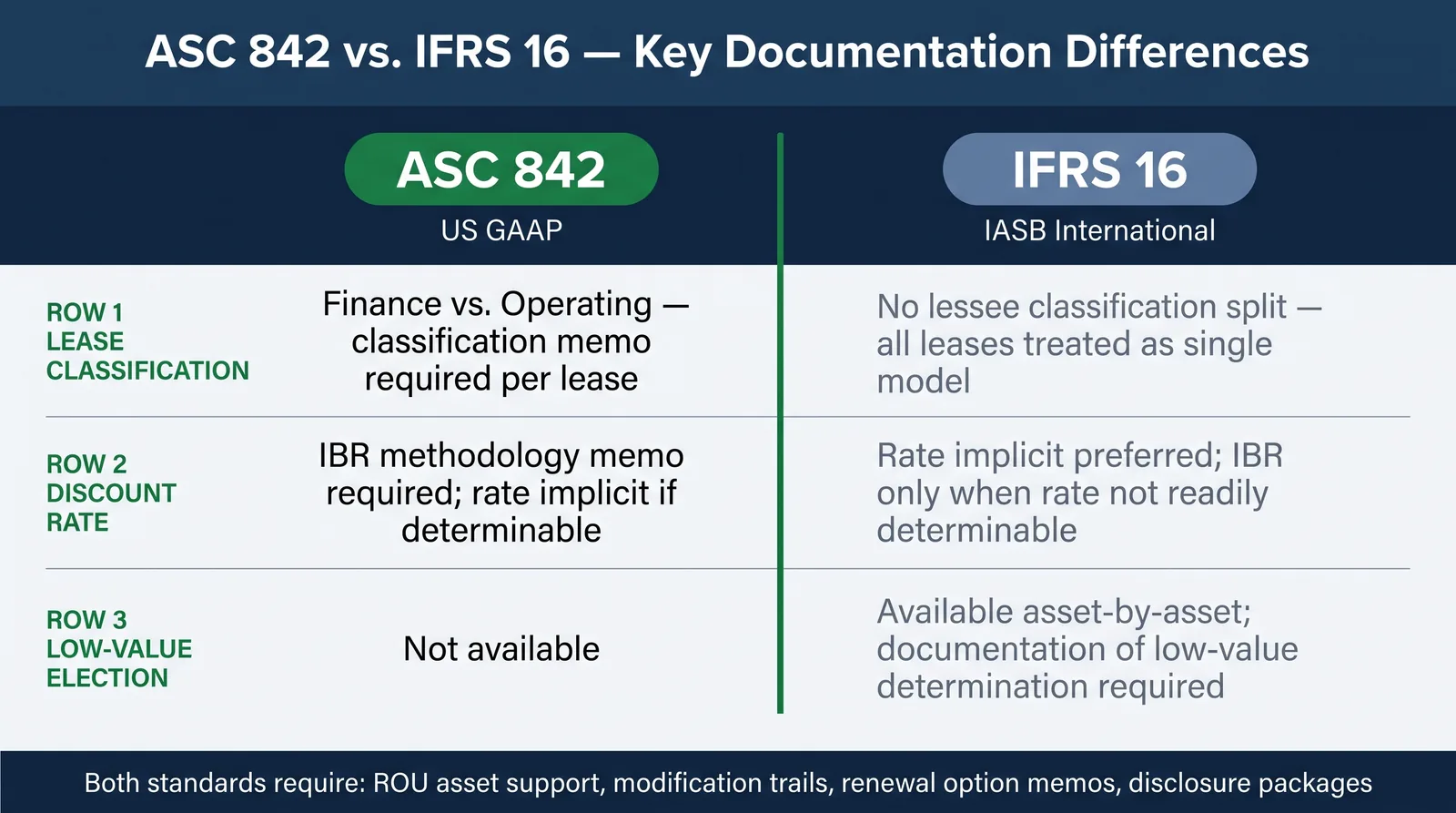
- ASC 842 and IFRS 16 are highly similar in documentation breadth, with specific differences in classification and election support.
- Multi-market portfolios need governance-layer controls such as enforced metadata, version locking, and auditable approval trails.
Why Lease Accounting Standards Create a Document Problem
Once leases move on-balance sheet across broad populations, document burden scales much faster than most teams expect. A portfolio can include ground leases, tenant leases, equipment leases, and embedded leases in service contracts. Each requires identification evidence and ongoing support.
The burden compounds at inception, reassessment points, modification events, and termination. This is why document architecture, not only accounting logic, determines audit outcomes.
ASC 842 vs. IFRS 16: What's Actually Different on Paper
Teams reporting under both standards should use one evidence backbone but support separate treatment outputs where required. Classification treatment and election evidence are the main divergence points.
The Five Document Categories Auditors Test First
- Lease population completeness evidence, including embedded lease identification procedures.
- ROU asset and lease liability calculation support tied to executed agreements and dated assumptions.
- Lease classification documentation (ASC 842), including test-by-test rationale.
- Modification and remeasurement records with updated rates, entries, and version snapshots.
- Renewal option assessments with dated reasoning at inception and reassessment triggers.
What External Auditors Specifically Look For
- Completeness: evidence that all lease contracts were identified, not just those already in the subledger.
- Existence and accuracy: each model input traces back to an executed source document.
- Measurement quality: discount-rate support is dated, specific, and consistent with model assumptions.
- Control operation: preparer/reviewer approvals and access controls are provable over time.
How Your Document System Must Be Structured to Pass
The strongest audit outcomes come from system design, not heroic manual prep. Core requirements are lease-centric organization, immutable versions, required metadata, complete audit trails, and disclosure-package retrieval on demand.
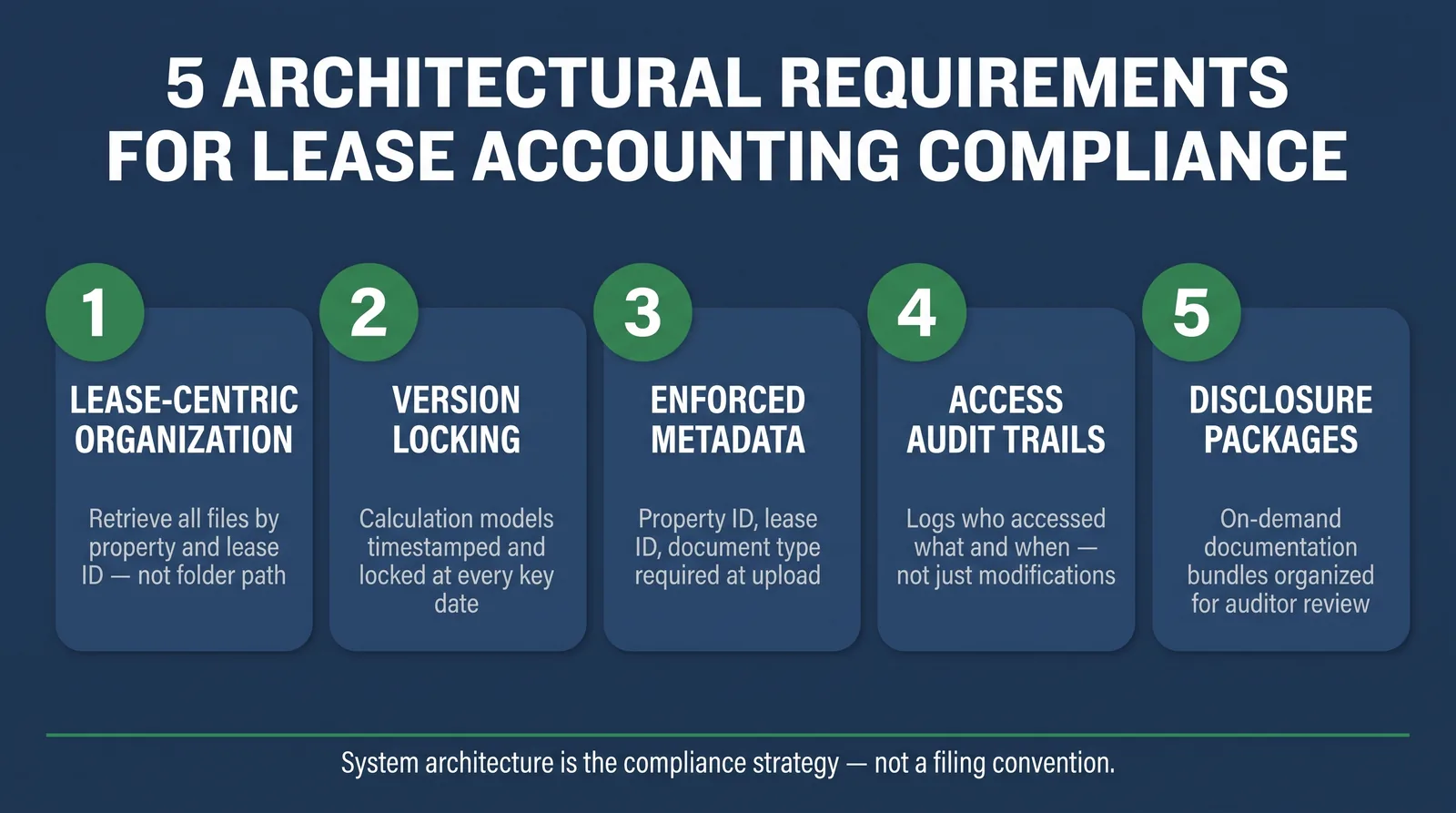
- Lease-centric indexing by property and lease identifier.
- Version locking at each key accounting event date.
- Upload-time metadata enforcement to prevent orphan records.
- Access and change trails for compliance control evidence.
- Auditor-ready disclosure support bundles generated without manual assembly.
See how ARC-Files handles ASC 842 document management for real estate teams.
Building Your Disclosure Support Package
Disclosure support requires two synchronized layers: subledger output for numbers and document-system evidence for judgments and source validation.
The recurring failure is fragmented support storage across properties and individuals. Standardized metadata, naming, and retrieval workflows remove that friction and shorten audit timelines.
Frequently Asked Questions
What documents are required for ASC 842 compliance in real estate?
Teams need executed agreements, amendments, classification support, discount-rate documentation, version-locked calculation models, modification packages, renewal assessments, and subledger-to-GL tie-out support.
How does ASC 842 differ from IFRS 16 for document management?
Most evidence categories overlap. Key differences center on lessee classification treatment and election-specific support such as low-value asset treatment under IFRS 16.
What do external auditors test first?
They typically begin with completeness, existence/accuracy, measurement support, and control operation evidence, with high focus on discount-rate and modification support quality.
Can spreadsheets satisfy ASC 842 documentation requirements?
Spreadsheets can compute values but usually fail on immutable versioning, complete audit trails, and controlled evidence retrieval at portfolio scale.
How should a real estate lease document system be structured?
It should be lease-centric, metadata-enforced, version-locked, and workflow-driven for modifications, approvals, and disclosure package output.
What is an ROU asset and what evidence supports it?
A right-of-use asset reflects the lessee's right to use leased property. Evidence includes executed lease terms, payment assumptions, discount-rate support, direct cost and incentive records, and dated calculation versions.
The Bottom Line
ASC 842 document management is an infrastructure problem. The difference between clean and extended audits is often missing support around otherwise correct accounting decisions.
Enterprise real estate teams need architecture that enforces capture and traceability by default: metadata governance, version locking, modification workflows, and disclosure-ready retrieval.
See how ARC-Files delivers SharePoint-native ASC 842 and IFRS 16 document governance.
Keep reading
Suggested Articles
Continue exploring document management, SharePoint governance, and compliance for commercial real estate teams.